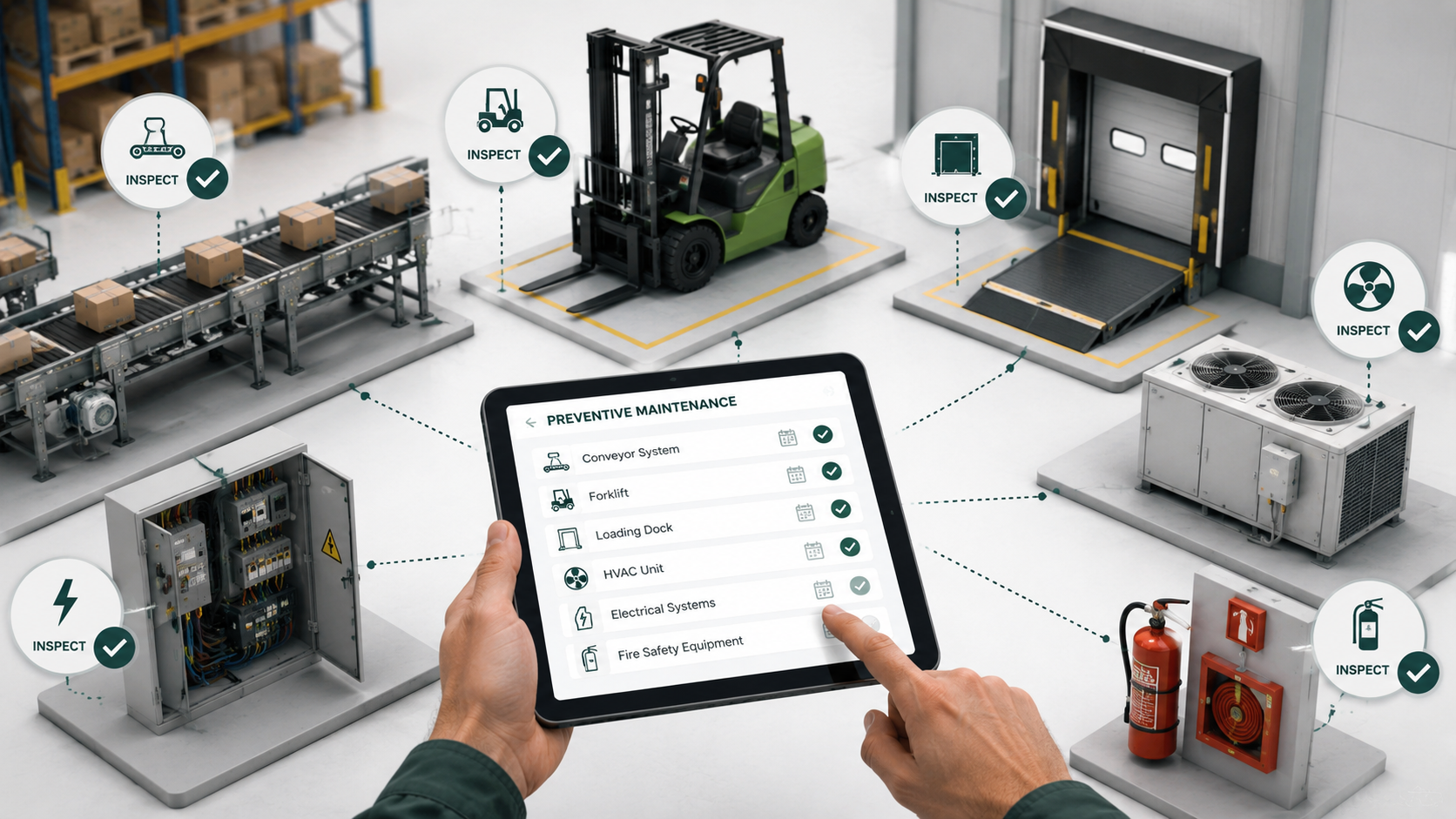
Warehouses run on equipment: conveyor belts, forklifts, pallet jacks, dock levelers, HVAC systems, lighting, fire suppression systems, and more. When any of this equipment fails unexpectedly, operations slow down or stop entirely.
A preventive maintenance (PM) program keeps warehouse equipment running reliably. The key is knowing what to inspect, how often, and how to track it. This article provides a practical PM checklist for warehouses and explains how to build a sustainable maintenance routine.
Why preventive maintenance matters in warehouses
Unplanned downtime in a warehouse doesn't just mean a repair cost. It means:
- Delayed shipments and missed delivery windows
- Idle labor that can't work without functioning equipment
- Overtime costs to catch up after repairs
- Safety risks from failing equipment
- Shortened equipment lifespan due to neglected maintenance
A structured PM program prevents most of these failures by catching small problems before they become big ones.
Teams that need to operationalize this checklist can review our warehouse maintenance software guide and preventive maintenance workflow.
Warehouse preventive maintenance checklist by equipment type
Conveyor systems
Conveyors are the circulatory system of a warehouse. When they stop, everything stops.
Daily:
- Listen for unusual noises from rollers, bearings, and motors
- Check for jammed or misaligned product on the belt
- Verify emergency stop buttons are accessible and functional
- Inspect belt tracking — the belt should run centered on the rollers
Weekly:
- Check belt tension and adjust if necessary
- Inspect rollers for wear, cracks, or buildup
- Lubricate bearings according to manufacturer specifications
- Clean sensors and photo-eyes
Monthly:
- Inspect drive motors and gearboxes for leaks or overheating
- Check electrical connections for corrosion or looseness
- Verify safety guards and interlocks are in place and functional
- Inspect chains and sprockets for wear and proper tension
Quarterly:
- Replace worn belts before they fail
- Check and calibrate speed controls
- Inspect structural supports for damage or corrosion
- Test emergency stop functionality across all zones
Forklifts and material handling equipment
Forklifts are the most frequently used equipment in most warehouses. Daily inspections are critical for safety and reliability.
Daily (before first use):
- Check tires for wear, damage, and proper inflation
- Verify forks are straight, not cracked, and properly positioned
- Test brakes, steering, and horn
- Check fluid levels: hydraulic oil, engine oil, coolant
- Inspect chains and mast for wear or damage
- Verify lights, alarms, and backup beepers function
- Check operator seat and seatbelt
Weekly:
- Inspect battery and charging system (for electric forklifts)
- Check for fluid leaks under the vehicle
- Test all controls: lift, tilt, and attachment functions
- Verify nameplate data is readable and matches the machine
Monthly:
- Clean battery terminals and check electrolyte levels (electric)
- Check engine air filter (internal combustion)
- Inspect hydraulic hoses for cracks or abrasion
- Lubricate all grease points
Quarterly:
- Change engine oil and filter (internal combustion)
- Replace hydraulic filter
- Inspect mast rollers and rails for wear
- Test load capacity if required by safety regulations
Dock levelers and loading docks
Dock equipment takes heavy abuse daily. Failures here directly impact loading and unloading operations.
Weekly:
- Inspect lip hinges and pivot points for wear
- Check hydraulic fluid level (hydraulic dock levelers)
- Verify the dock leveler returns to the stored position correctly
- Inspect safety struts and vehicle restraint systems
Monthly:
- Lubricate all moving parts according to manufacturer specs
- Check for cracks or deformation in the dock leveler platform
- Inspect weather seals around dock doors
- Test emergency stop and manual release functions
Quarterly:
- Inspect structural welds and supports
- Test vehicle restraint engagement and disengagement
- Inspect dock bumpers for wear and replace if compressed beyond spec
- Check overhead door springs, cables, and rollers
HVAC and ventilation
Warehouse climate control affects both equipment and personnel. HVAC failures can make a warehouse unusable in extreme weather.
Monthly:
- Replace or clean air filters
- Check thermostat calibration and setpoints
- Inspect condenser and evaporator coils for dirt or debris
- Verify drain pans and condensate lines are clear
Quarterly:
- Inspect belts and pulleys for wear and tension
- Check refrigerant levels and look for leaks
- Clean outdoor condenser units and remove debris
- Test safety controls and emergency shutoffs
Annually:
- Professional inspection by a licensed HVAC technician
- Deep clean of all coils and drain lines
- Check ductwork for leaks or damage
- Calibrate all sensors and controls
Fire suppression and safety systems
Fire safety equipment must be maintained not only for safety but for regulatory compliance. Skipping inspections can lead to fines and insurance issues.
Monthly:
- Verify fire extinguishers are in their designated locations
- Check extinguisher pressure gauges are in the green zone
- Inspect sprinkler heads for obstructions or damage
- Test emergency lighting and exit signs
Quarterly:
- Verify fire alarm system is operational
- Inspect sprinkler control valves for proper position
- Test backup batteries in alarm panels
- Check that fire doors close and latch properly
Annually:
- Professional inspection of all fire suppression systems
- Hydrostatic testing of extinguishers as required
- Full fire alarm system test
- Update fire safety documentation and evacuation plans
Electrical and lighting
Electrical failures can cause downtime across the entire facility. Regular inspections prevent most electrical emergencies.
Monthly:
- Inspect panel boards and breakers for signs of overheating
- Test GFCI outlets in restrooms and break areas
- Check for flickering lights or burned-out fixtures
- Verify emergency lighting is functional
Quarterly:
- Thermal scan of electrical panels to detect hot spots
- Inspect wiring for damage, especially in high-traffic areas
- Test backup generator and transfer switch
- Check battery chargers for emergency systems
Annually:
- Professional electrical inspection per local codes
- Torque check on breaker connections
- Full generator load bank test
- Update electrical single-line diagrams
Building structure and general
Quarterly:
- Inspect roof for leaks, ponding water, or damage
- Check exterior walls and dock seals for gaps or damage
- Inspect floor for cracks, spalling, or hazardous conditions
- Verify that aisle markings and signage are visible
Annually:
- Professional roof inspection before rainy season
- Check for pest infestation signs
- Inspect exterior drainage systems
- Review and update facility documentation
How to build a PM program that actually gets done
A checklist is only useful if it's followed. Here's how to make sure PMs don't get skipped:
Assign ownership
Every PM task should have a clear owner. "Someone inspects the forklifts" means nobody inspects the forklifts. Assign specific people to specific checks.
Use recurring schedules
Enter your PM tasks into a system that automatically generates work orders on the right cadence. If you rely on a calendar reminder, it will eventually get ignored. If the system creates a work order, it flows into the same queue as everything else.
Make checklists visible
The technician performing the PM should see the checklist items on their phone or tablet. Not on a printed sheet that gets lost. Not in a binder in the office. Each item should be checkable, with space for notes and readings.
Record results
Inspections that find nothing wrong are still valuable — they prove the equipment was checked. Inspections that find issues need to trigger follow-up work orders. A PM that finds a worn belt and doesn't create a repair work order is a missed opportunity.
Review PM completion rates
Track how many scheduled PMs were completed on time vs. overdue. If completion rates decline, the schedule needs review — either the frequency is too aggressive, the task is taking too long, or it's assigned to the wrong person.
Getting started with warehouse PM
If you don't have a formal PM program today, here's how to start:
- List your critical equipment. Identify the 10 to 20 pieces of equipment that would cause the most disruption if they failed.
- Find the manufacturer manuals. Most include a maintenance schedule. Use it as your starting point.
- Create PM checklists. Write down what to inspect, what to measure, and what to do if something is out of spec.
- Set up recurring schedules. Enter each PM task into your maintenance system with the right frequency.
- Start tracking. Run the first cycle and note what takes longer or shorter than expected. Adjust the schedule after 30 days.
Liquid CMMS helps warehouse teams manage preventive maintenance with recurring schedules, mobile checklists, and asset history. Start your free trial — no credit card required. Built for lean teams that need PM without enterprise overhead.